CAD integration with Odoo
From design to production without double entry work
Many manufacturing companies work daily with CAD software such as SolidWorks, Autodesk Inventor, Solid Edge or AutoCAD. Product design takes place in the CAD system, while bills of materials, items, purchasing, and production are often managed in an ERP system..
With a CAD integration to Odoo these worlds are connected. This allows data to be exchanged automatically, and manual entry and errors are largely a thing of the past.
Why a CAD integration with Odoo??
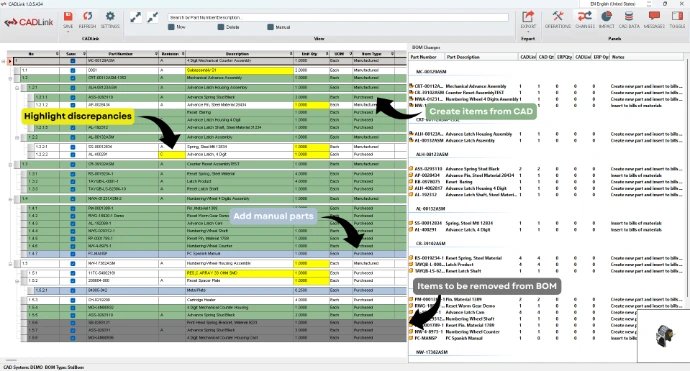
Automatic synchronization of bills of materials (BOMs)
No duplicate entry of items and parts
Always up-to-date revisions between engineering and production
Faster transfer from design to production
Fewer errors due to one central data source
Real-time insight into engineering and production data
Supports engineer-to-order (ETO) processes
Seamless integration with production, purchasing, and inventory management
Key functionalities of CADLink summarized:
Production planning & Capacity management with CADLink
From design to production without duplicate entry.
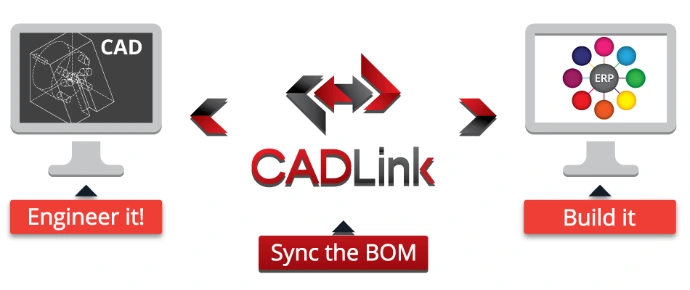
CADLink synchronizes bills of materials, parts, and revisions directly from your CAD system to Odoo. Engineering and production always work with the same up-to-date data, preventing errors and allowing new designs to be brought into production more quickly.
Complete control over product structures, revision management, and item data from one central source.
Bills of materials (BOM) & Revision management
Always up-to-date product data from your CAD system.
With CADLink, bills of materials, parts, and revisions are automatically synchronized between your CAD system and Odoo. This ensures that engineering, work preparation, and production always have the same up-to-date product information and prevents duplicate entry. Changes in a design are immediately processed in Odoo, allowing production to work with the correct version of the bill of materials.
This reduces errors, speeds up the transfer from engineering to production, and ensures complete control over product structures and revisions.